

International SL Testimonials AY2026
Silliman University, Philippines
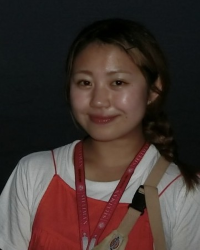
SEKIYAMA, Sara
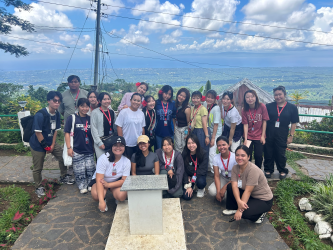
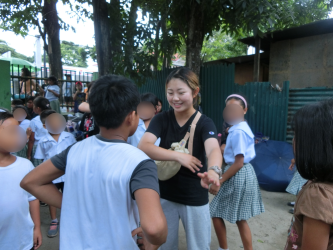
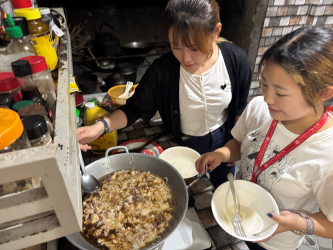
The International Service-Learning Program was an experience that significantly transformed my values and way of thinking in just one month. Born and raised in Japan with no previous experience of living abroad for an extended period, I found it profoundly enriching to live in an unfamiliar place, interact with local people, and encounter new cultures and perspectives. These experiences contributed greatly to my personal growth. In addition, discussions with social work students at Silliman University, along with daily journaling and reflection activities, provided valuable opportunities to think deeply about the social issues facing both Japan and the Philippines.
My time in the Philippines was filled with new experiences, from having five meals a day to living without access to a shower. Among these experiences, what left the strongest impression on me was the time at a shelter for children who had experienced abuse or neglect. When I asked a girl my age when her birthday was, she replied, “I don’t know when my birthday is.” I was deeply shocked by her response. It reminded me that what I take for granted is not necessarily shared by everyone, and it challenged many of my assumptions and beliefs.
Through these experiences, I discovered new possibilities within myself that I would likely never have recognized before joining the program. The program enabled me to step beyond my previous perspectives and grow in ways I had never imagined.
|
Lady Doak College, India

YANAI, Nonoka
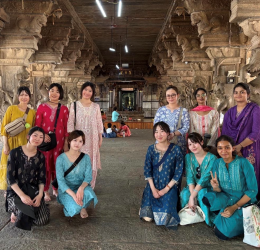
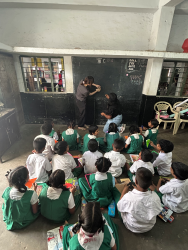
One of the most memorable aspects of this program was our work at a local elementary school. I was surprised by how interested the children were in us and in Japan, far more than I had expected. To help them learn about Japan in an enjoyable way, we incorporated activities such as quizzes, origami, songs, and Japanese writing exercises. We repeatedly discussed and refined our ideas, considering what kinds of activities would best capture their interest. Although our time together was short, I feel that we were able to build meaningful connections with the children.
I was also deeply impressed by the support we received from local student volunteers and teachers. When they casually remarked, “We do it simply because we want to,” it made me rethink my understanding of goodwill and service. I came to realize that helping others is not necessarily about self-sacrifice; rather, it may lie at the intersection between what we genuinely want to do and what is meaningful for others.
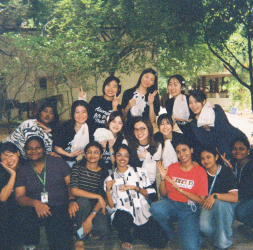
Before joining the program, I was more interested in gaining new perspectives than in volunteering itself. However, through both the coursework and the field experiences, I came to understand that service-learning is much more than volunteer work. It is a form of learning that challenges us to reflect on ourselves through engagement with others. The experience not only deepened my understanding of different cultures but also encouraged me to think critically about my own values and positionality. It was a valuable opportunity to develop my own questions, pursue my own learning, and grow in ways I had not anticipated.
|
Petra Christian University, Indonesia
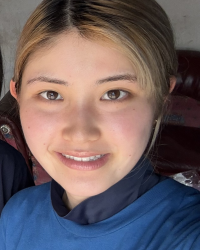
AOYAMA, Kei
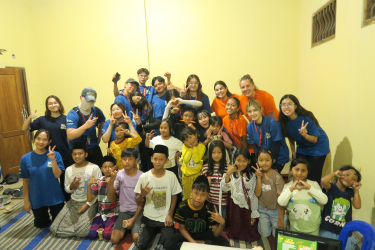
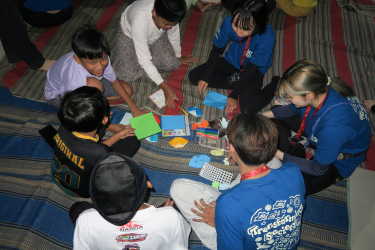
The program in Indonesia was an extremely meaningful opportunity to learn about multicultural collaboration while experiencing firsthand the challenges faced by local communities. During the approximately three-week homestay, I became immersed in daily life in the community and gained a deeper understanding of cultural differences through interactions with my host family. One of our activities involved teaching Japanese culture classes at a local high school. The students participated enthusiastically, and there were many enjoyable opportunities to share our respective cultures through activities such as anime-related discussions and traditional games. Another highlight was participating in a community wall-painting project. Working together with participants from different countries to enhance the local environment, I experienced the satisfaction of creating something meaningful as part of a multicultural team.
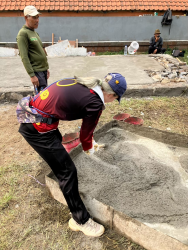
Among the various service activities, what left the strongest impression on me was the village's serious waste management problem and the people working to address it. Before traveling to Indonesia, I was shocked to learn that there were places where mountains of garbage covered the ground so completely that the surface beneath could no longer be seen. However, visiting such a site and taking part in cleanup efforts with my own hands left a lasting impact on me. Because there was no suitable place to store waste, we began by constructing a foundation for a well-ventilated storage area. I was deeply moved by the determination of the villagers, who carried out all of the work manually without the aid of machinery. Even when language barriers made communication difficult, Indonesian university students supported us as interpreters, enabling us to collaborate effectively and move the project forward together.
Through these experiences, I realized that encountering realities different from what I had imagined beforehand can be one of the most valuable forms of learning. I also learned that meaningful relationships can be built across cultural and linguistic differences when people approach one another with respect. Interacting with people from diverse backgrounds challenged many of my assumptions and prompted me to reflect deeply on my own values and perspectives.
|
University of Cape Town, South Africa
ISHII, Haruto
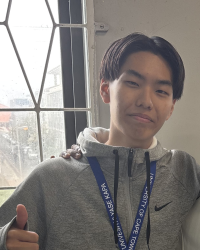
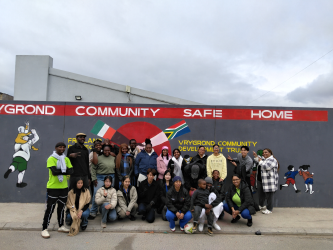
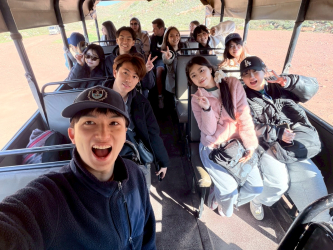
My five weeks in South Africa were both fulfilling and full of discovery, passing far more quickly than I had expected. One of the distinctive features of the South Africa program was its well-structured curriculum and the many opportunities it provided for academic learning. As a student of Environmental Studies and Biology, I found it particularly fascinating to view my experiences in South Africa through an environmental lens. At the same time, the program exposed participants to a wide range of topics, including education, gender, sociology, and development studies, making it an excellent opportunity to explore and discover new academic interests.
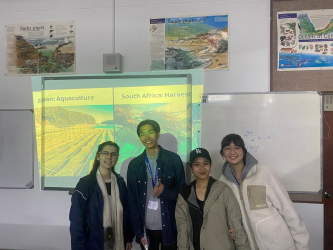
The service activity that left the strongest impression on me was the four days I spent at Groote Schuur High School. In a role that was neither student nor teacher, I facilitated a lesson on a topic related to Japan. Drawing on my interest in marine science, I chose seaweed as the theme of my workshop and explored the relationship between Japanese seaweed culture and sustainability. Together with the students, I discussed how seaweed could contribute to a more sustainable society. Being able to connect my academic interests with this community-based activity was one of the most memorable aspects of the program.
Before traveling to South Africa, I had many concerns about living in a residence hall and about safety. However, by the time I returned home, those concerns had been far outweighed by a strong sense of fulfillment and accomplishment. I feel that everything I learned through this experience will inform my future coursework and research. I look forward to exploring how the experiences and lessons I gained in South Africa will shape my future studies and research.
|
Mahidol University International College, Thailand (Faculty-led Course)
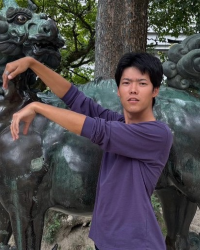
MIYAZAKI, Yu
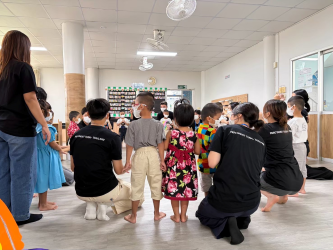
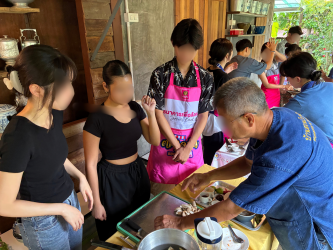
My experience in Thailand was not only an opportunity to discover a new world, but also a chance to reexamine the world I had always known. Through visits to various NGOs and community organizations and through interactions with the people who worked and lived there, I encountered environments and cultures different from those in Japan. These experiences allowed me to step back and reflect on many of the things I had previously taken for granted. I came to realize that going abroad is not only about learning about distant places, but also about gaining a deeper understanding of one's own community and society.
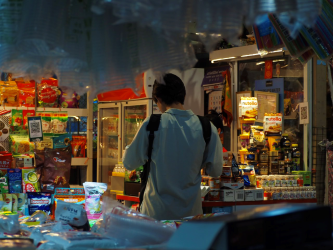
One experience that left a particularly strong impression on me was speaking with a shop owner who recalled the days when customers would arrive by boat to shop at her store. While improvements in infrastructure and the spread of convenience stores have undoubtedly made daily life more convenient, I learned that the landscapes and ways of life that once defined the area are gradually disappearing. What struck me most was the realization that, even as people pursue convenience and efficiency, they still long for meaningful relationships and a sense of belonging.
Listening to people's stories and spending time with them gave rise to many questions within me. Although I do not yet have answers to all of them, I have come to believe that continuing to carry those questions is itself an important part of learning. For this reason, I hope that future participants will cherish the people they meet and the experiences they encounter through the program. By discovering a world beyond your own, you may also come to see familiar surroundings in an entirely new light and notice things that had previously escaped your attention.
|
Hakuna Sida for Girls, Kenya (Faculty-led Course)
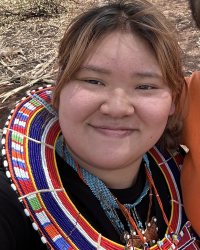
TOGUCHI, Haruka
The service-learning program in Kenya was a truly valuable experience that was made possible by the generous support of both the university and our local host organization. It provided me with the opportunity to learn about topics that interested me and to encounter ways of life and perspectives that I would not have been able to experience on my own. Even when I experienced health issues during the program, the leader of Hakuna Shida for Girls went above and beyond to support me, enabling me to continue my activities with confidence and peace of mind.
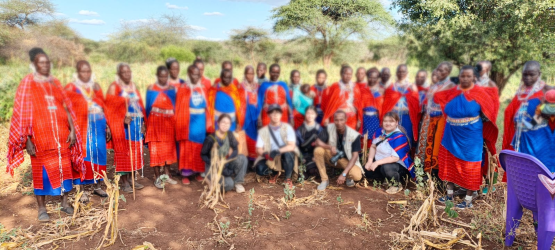
One of the most memorable aspects of the program was the friendships I formed in Africa. Because there are relatively few foreign visitors in rural areas of Kenya, many people showed a genuine interest in both me and Japan. Their warm welcome and willingness to openly share their experiences and perspectives enabled me to gain a much deeper understanding of Kenya. I was also able to learn a great deal about FGM, a topic I had been interested in before joining the program. Members of the Maasai community encouraged me to ask any questions I had, which gave me the opportunity to engage with this sensitive issue in a meaningful and respectful way.
Through these experiences, I came to realize that I had viewed Kenya rather narrowly as a “developing country.” While the country certainly faces economic challenges, I was also impressed by the advances being made in education and technology. Seeing these different aspects of Kenyan society firsthand encouraged me to think more critically and from multiple perspectives about social issues, development, and the nature of support and assistance.
|