

Matsusaka City, Mie Prefecture & ICU Hachiro Yuasa Memorial Museum
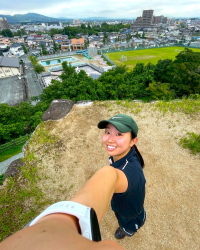
ATARASHI, Erika
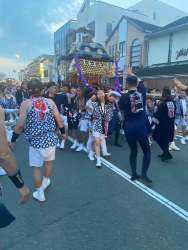
I decided to participate in this program because I wanted to explore how I could engage with society through culture. Through my service activities at ICU and in Matsusaka City, I came to realize the importance of viewing local communities not as places to be temporarily consumed, but as places with which we can build a meaningful and lasting connection, especially in an age when access to and dissemination of information have become easier than ever.
While working with communities facing challenges such as population decline and an aging society, I experienced firsthand how culture can connect people and serve as a bridge for addressing local issues. In the future, I hope to work in the tourism or media industry, creating opportunities for people to discover and appreciate the unique attractions and values of different regions through meaningful human connections.
I had originally planned to participate in my second year but was forced to withdraw due to a chronic health condition. Fortunately, my health has since stabilized, and with the generous financial support provided through this scholarship, I was able to devote myself fully to the program without financial concerns.
It is my sincere hope that this scholarship will continue to enable more students to engage in meaningful learning experiences within local communities and gain valuable insights through such opportunities.
   |
MORI, Mariko
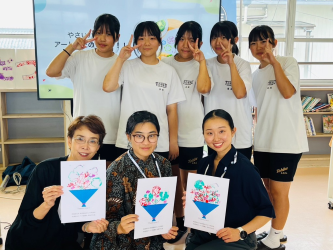
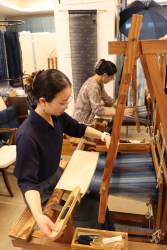
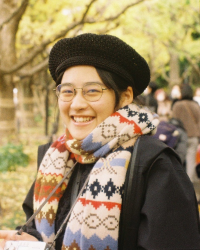
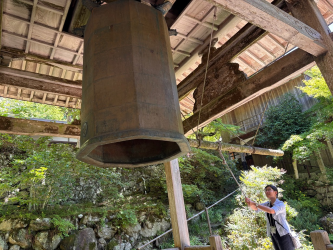
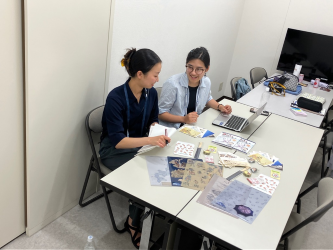
While studying museum studies and cultural heritage in the Curator Certification Program, I became interested in Matsuura Takeshirō’s “Ichijōjiki” (One-Tatami-Mat Room), which is preserved at ICU’s Taizansō. This interest encouraged me to participate in a Community Service-Learning (CSL) program based at the ICU Hachiro Yuasa Memorial Museum and Matsusaka City in Mie Prefecture. Through this program, I learned about and shared the historical and cultural significance of both Matsuura Takeshirō, the explorer from Matsusaka who serves as a link between Matsusaka City and ICU, and the “Ichijōjiki.”
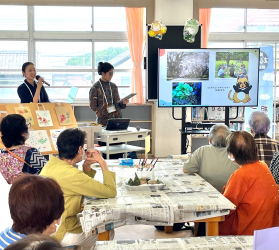
During the program, I engaged not only in museum-related activities at the Matsuura Takeshirō Memorial Museum, but also in craft workshops for children and senior citizens, tourism-related fieldwork, and community exchange events with local residents. By interacting directly with people whom I would not normally meet in my university life, I gained valuable opportunities to learn about and reflect on both the challenges facing local communities and the unique culture and attractions of the region.
Through CSL, I came to realize that service is not simply about providing something to others. Rather, it is an experience of recognizing one’s own position in society, learning together with community members, and transforming one’s own perspectives through engagement with others. Building on this experience, I hope to deepen my academic studies at university and, as an SL Ambassador, share the value of service-learning with fellow students while continuing to contribute to society in various ways.
   |
Free Space Cosmo
KOKUBUN, Miki
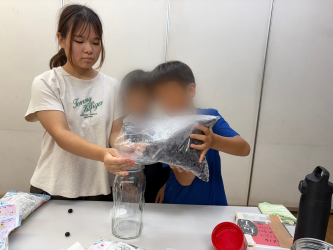
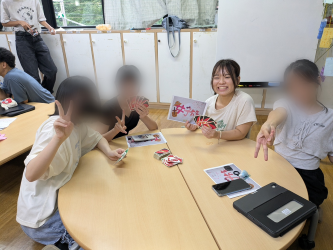
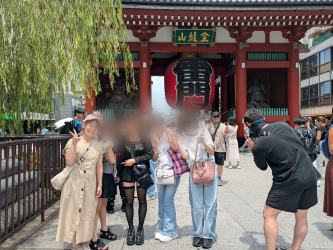
I completed 130 hours of service activities at Free Space Cosmo, a program operated by the Bunka Gakushu Kyodo Network in Mitaka City. Cosmo is a free space that serves as an alternative place for elementary and junior high school students to spend their weekdays instead of attending school.
Having attended conventional schools continuously from elementary school through university, and having had very few classmates who were absent from school for extended periods, I found Cosmo to be a very new and eye-opening environment. Many of the children I met there were also quite different from those I had previously interacted with.
Through observing the children, playing with them, and communicating with them during my service activities, I came to realize that Cosmo functions not as a “special place” for them, but rather as a natural and reassuring part of their everyday lives. During these two months, I spent a great deal of time reflecting on what I, as a staff member, could contribute in such a space and how I should be present for the children.
As I continued my activities, I gradually built closer relationships with the children. Although the Service-Learning program has now concluded, I plan to continue volunteering at Cosmo in the future.
Cosmo is a free and flexible environment that respects each child’s individual interests and aspirations. At lunchtime, however, everyone gathers around the table and shares a meal together. Since I joined the members for lunch every day I was there, the scholarship support I received was used primarily to cover my lunch expenses during the service period.
   |
Petra Christian University, Indonesia
SATO, Sakura
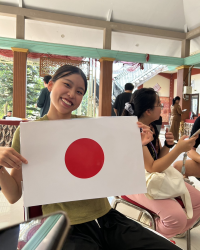
I participated in a Service-Learning program in Indonesia during the summer of 2026.
After taking a course on Development Studies in the previous academic year, I began to think about both the positive and negative impacts of “development” and “progress.” As a result, I became interested in seeing for myself the realities of regions that are often described as developing. Among ICU’s Service-Learning programs, I hoped to participate in the Indonesia program because it offered the opportunity to interact closely with local residents through a homestay experience. Although I was in a situation where I could not place an additional financial burden on my parents, the support provided through the scholarship enabled me to participate and have a valuable experience unlike any I had had before.
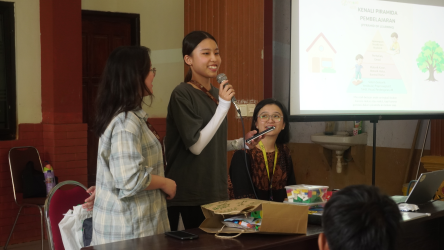
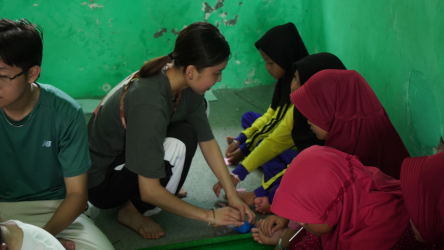
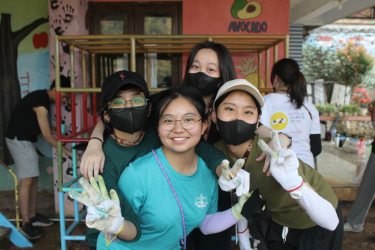
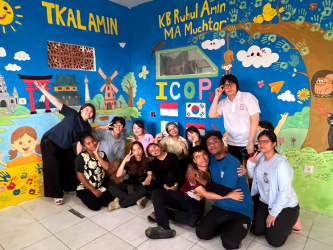
In Indonesia, I was involved in activities such as creating murals, assisting with classes at kindergartens and elementary schools, and helping to conduct workshops for local residents. I was able to interact not only with my host family but also with many people and children in the village, and I experienced their warmth and kindness firsthand. In addition, because I participated in the program alongside students of the same generation from various countries, I learned a great deal from them and formed friendships that I will always value.
The experience and learning I gained through this program were so meaningful that they made me forget the anxieties I had felt before participating. I am sincerely grateful for being given such an opportunity. I hope to build on this experience in my future studies at university.
   |
KIM, Gyung Won
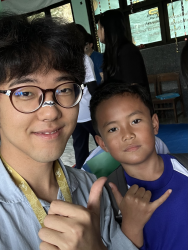
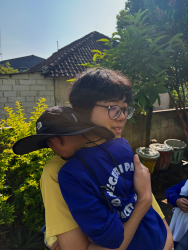
My name is Gyung Won Kim, a 2nd-year student interested in the Education major. I still vividly remember passing through the hallway of Honkan when something caught my eye. It was the service-learning poster displayed on a screen. From that moment, I began searching for application procedures and information about the different international service-learning programs ICU offered. Among the programs offered, I was most interested in the one at Petra Christian University in Indonesia. One reason was that my dorm roommate was an Indonesian student, and I wanted to learn more about their culture and language.
However, the program cost was higher than I had expected. I am from a family with two working parents and three siblings, all of whom are university students. My grandma, who is in Korea, has been recently diagnosed with stage four liver cancer, which has led to my mother going back and forth from Japan to Korea while working. I did not want to place a heavy burden on my parents and wanted to be able to cover the program fee independently.
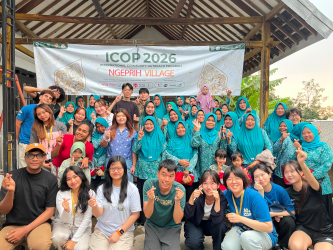
Thankfully, this was all made possible by the scholarship. Through this scholarship, I was able to experience what it is like to live in a community through the homestay at an Indonesian Muslim village and build lifelong friendships with the students who participated in this program. Truly, the experience I have been gifted through this service-learning program has transformed and deepened my understanding of what community looks like. Although there were language barriers between the villagers and me, they treated me with warmth and love that was so tangible throughout the four weeks. As I embraced and tasted the Indonesian language, I was inspired to study it more seriously. That is why I am planning to take Bahasa Indonesia in the fall term, return to the village, and have more conversations with them. The service-learning experience is something I will treasure forever as I continue my learning at ICU.
   |
University of Cape Town, South Africa
ISHII, Haruto
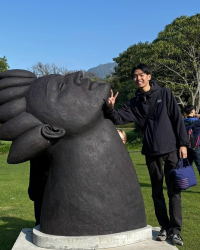
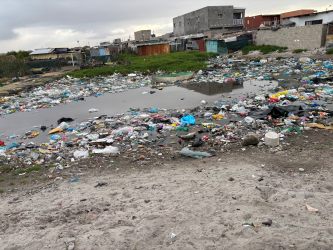
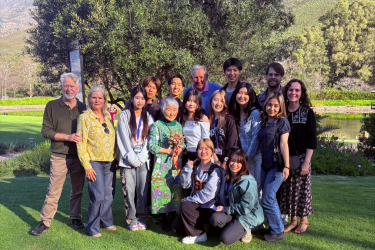
Since entering ICU, I had planned to major in Environmental Studies, and I wanted to learn firsthand how environmental issues arise in different contexts, how people perceive and respond to these challenges, and how environmental education is implemented in practice. With these goals in mind, I participated in the International Service-Learning program in South Africa.
At the same time, I was also considering participating in an exchange program during my third year at university. Because it would have been difficult for me to cover the costs of both the International Service-Learning program and a future exchange program, I had almost given up on joining the South Africa program. However, thanks to the generous support of the Service-Learning Scholarship, I was able to make the trip a reality.
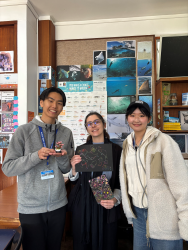
During the approximately one-month (five-week) program, I was exposed directly to local environments and perspectives that I could never have fully understood through information gathered online in Japan. In many cases, my experiences challenged and even overturned the assumptions and hypotheses I had formed before departure. The opportunity to observe, learn, and engage with people firsthand was invaluable, and I believe it will greatly influence both my future studies and my career aspirations.
I am deeply grateful for this opportunity and hope to make full use of what I learned in South Africa. Moving forward, I intend to apply the knowledge, insights, and experiences I gained there to my academic studies and future professional endeavors.
   |
LIU, Wenmo
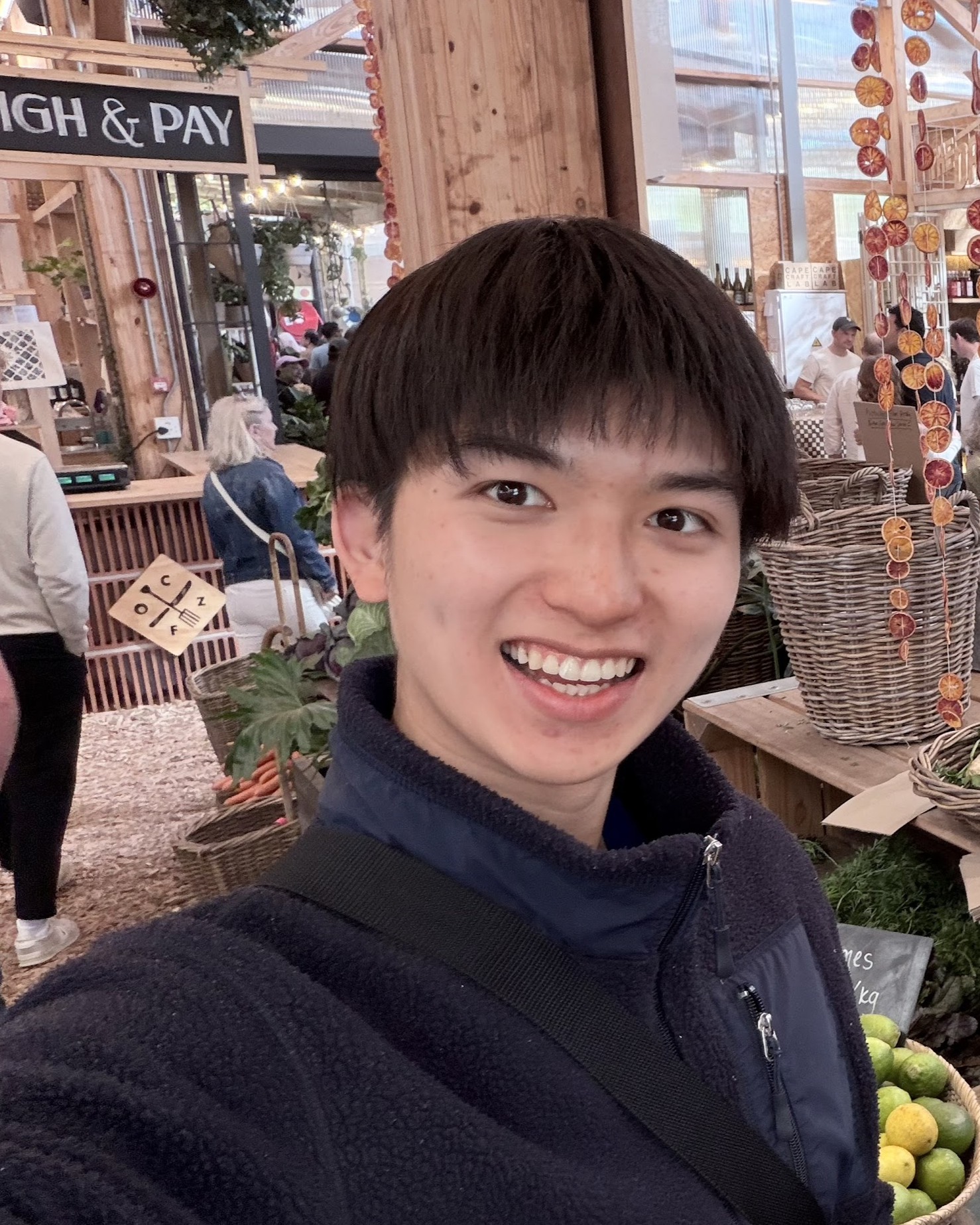
I participated in the International Service-Learning Program in South Africa. Working in Africa had been a dream of mine since before entering university. However, compared with other program destinations, participation in South Africa required significantly greater financial resources, and at first I thought I would have to give up the opportunity because it would be difficult to cover the costs. It was then that I learned about this scholarship, which made it possible for me to travel to South Africa and take part in the program.
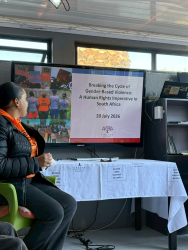
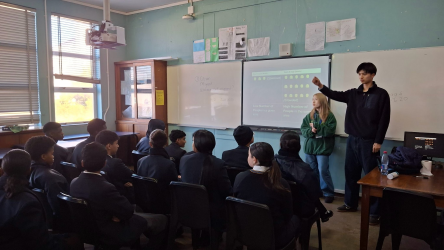
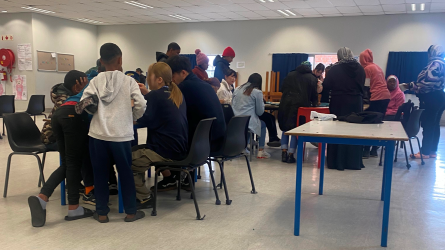
During the program, I visited NGOs working in under-resourced communities and observed classes at local primary and secondary schools. One of the NGOs we visited focused on addressing gender-based violence (GBV). Through this experience, I learned how widespread and deeply serious the issue is in South Africa. At the same time, I realized that similar issues exist in Japan as well, yet I had previously been largely unaware of them. This was an insight I could only have gained by being there in person and engaging directly with local people and communities.
In the future, I hope to combine my knowledge of biology with perspectives from public policy and pursue a career with an international organization in the fields of global health or humanitarian assistance. I would like to use the experiences made possible by this scholarship as a foundation for my future studies and professional aspirations.
  |

MINAGAWA, Kokona
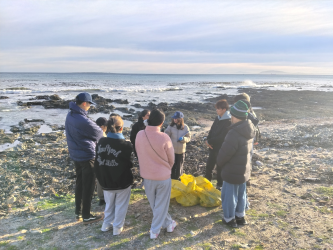
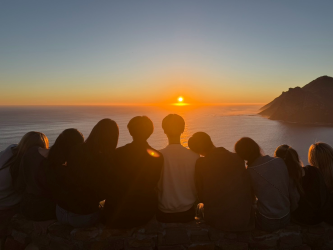
The very first thing that impressed me upon arriving in Cape Town was its breathtaking natural beauty. The sunrise and the cityscape of Cape Town viewed from a hill near the residence hall where we stayed for a month left me speechless no matter how many times I saw them.
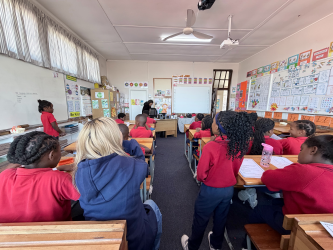
I was also fascinated by the unique plants native to South Africa that we encountered during our three days at a botanical garden. Many of them had striking colors and forms unlike anything I had ever seen in Japan. At the garden, educational workshops were held where students learned about topics such as the water cycle and food chains through direct experiences in nature, and our role was to assist with these programs.
One of the most memorable experiences was spending time with high school students from the Western Cape who were visiting the garden on a school excursion. Walking together through the vast grounds while learning about South Africa’s natural environment showed me how enjoyable and engaging learning can be when combined with hands-on experiences. Interacting with these students also gave me the opportunity to learn more about South Africa itself, including its education system and even recommendations for local snacks and treats.
My experience at the botanical garden truly embodied the essence of “service” and “learning.” While supporting the educational activities, I was simultaneously learning from the students, the staff, and the natural environment around me. It was a powerful example of how service-learning creates opportunities for mutual learning and growth.
   |

YOSHIMURA, Miku
My participation in the Service-Learning program in South Africa was a month filled with learning and internal struggle. Living in a society different from the communities I had always been familiar with, I was able to encounter firsthand the ways of thinking and living of people shaped by the country’s complex and rich history, culture, and social structures. Through conversations with people from different backgrounds in museums, NGOs, educational institutions, and local communities, I came to realize, day after day, that the more I learned, the more aware I became of how much I did not know.
Being in an environment far removed from my daily life also led me to confront aspects of my own values and the ways my mind and body responded to unfamiliar situations. Using the confusion, discomfort, and emotions that I could not fully put into words as points of reflection, I continued to think deeply about my position in society, the privileges and responsibilities that come with it, and my own identity.
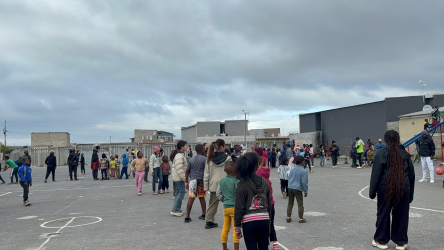
One experience that remains particularly vivid was visiting a township with young people from a local NGO and spending time with the children who lived there. I remember being overwhelmed by a complex mix of emotions that did not seem to fit into words: a sense of guilt that I might be consuming someone else's daily life as an object of learning, an awareness of how my own existence rests upon multiple layers of privilege, and a feeling of being an outsider. None of these explanations felt entirely adequate, yet together they formed an intense and complicated emotional experience that left me unable to stop crying. Even now, after returning to Japan, I find myself reflecting on that experience repeatedly. By continuing to think about the reasons behind those tears, I hope never to forget what I felt at that moment.
What I found during that month was not an absolute answer, but rather a question worth asking for the rest of my life. It was, without a doubt, a month that will remain one of the most valuable experiences of my life.
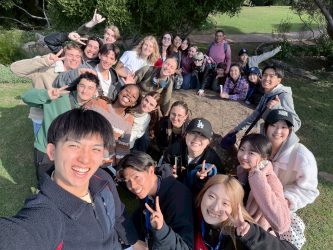
I also shared the program with ten other ICU students. Because each of us had different academic interests, personalities, and backgrounds, we often noticed different aspects of the same activities and developed different interpretations of what we experienced. Our daily conversations brought many opportunities for learning and new insights. Above all, I feel grateful to have met such important companions through this program.
   |