

Peace & Reconciliation Week 2026
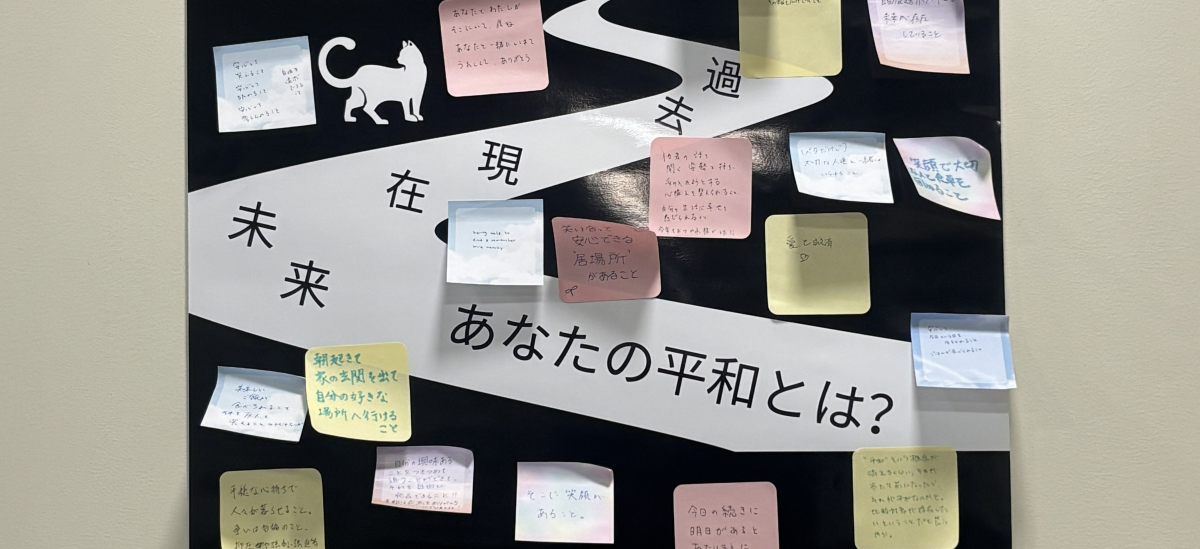
International Christian University (ICU) held its “Peace & Reconciliation Week 2026” from Monday, May 25 to Saturday, May 30, 2026. Following last year’s successful launch, this marked the second iteration of the event, drawing participation from a wide range of students, faculty, and staff.
The event, centered on the themes of “peace,” “reconciliation,” and “diversity,” was planned and organized primarily by students themselves. This year, the Peace & Reconciliation Week 2026 Executive Committee led the initiative in collaboration with various student organizations and university partners, including "ICU × Peace and Reconciliation Club", "Connecting the Memories of Nagasaki, Tohoku", "RAC of ICU", "IRIS (ICU Refugee and Immigration Support)", and "Middlebury College School in Japan". The event was further supported by the Research Center for Nuclear Weapons Abolition (RECNA) at Nagasaki University, the NPO Piece of Syria, the media NGO Dialogue for People, the Nagasaki Archive (University of Tokyo, Watanabe Lab), and ICU Archives. It was held with the support of the ICU Peace Research Institute (PRI) and the Service-Learning Center, and received funding from the Japan ICU Foundation (JICUF).
Throughout the week, a diverse range of programs—including exhibitions, lectures, workshops, and dialogue sessions—were held across campus. Notably, students who had participated in last year’s Nagasaki Service-Learning (SL) program established the Peace & Reconciliation Week 2026 Executive Committee and played a central role in planning and managing the event. Below are selected highlights, particularly from initiatives led by these SL participants.
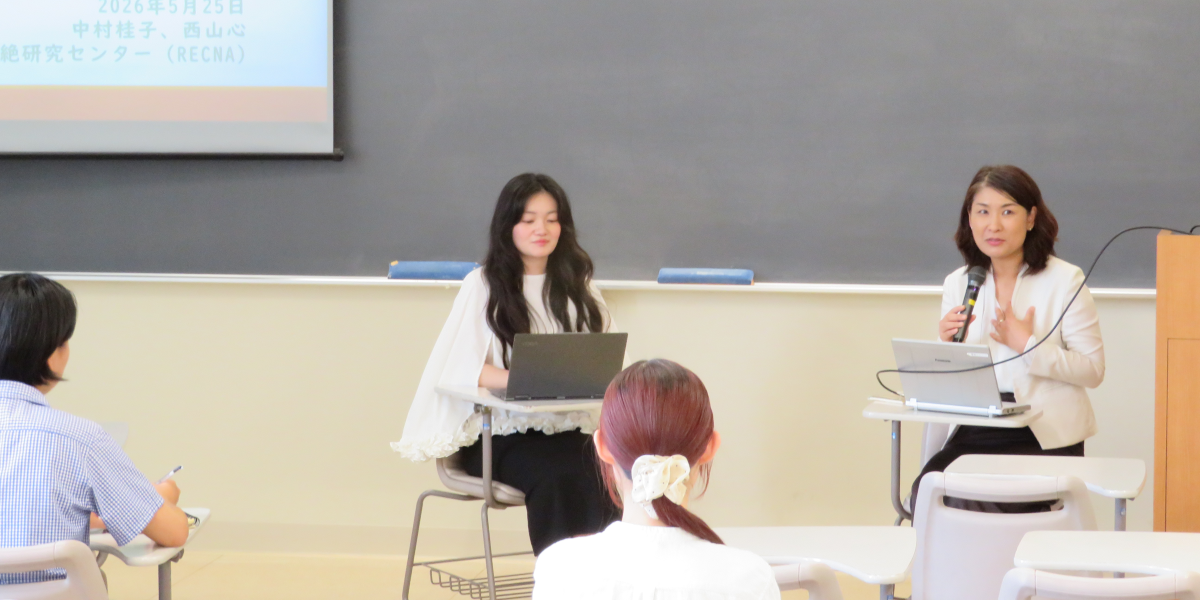
In the lecture series, Associate Professor Keiko Nakamura and Visiting Researcher Kokoro Nishiyama from the Research Center for Nuclear Weapons Abolition (RECNA), Nagasaki University, were invited to speak in a session titled “Nuclear Weapons and Peace: Frontlines of Disarmament, Non-Proliferation, and Peace Education.” In addition, Mr. Motohide Yoshikawa, a former Ministry of Foreign Affairs official and former faculty member at ICU, delivered a talk on “Nuclear Disarmament in Japanese Diplomacy,” sharing insights into the realities and dilemmas of international politics, followed by an active discussion with students.
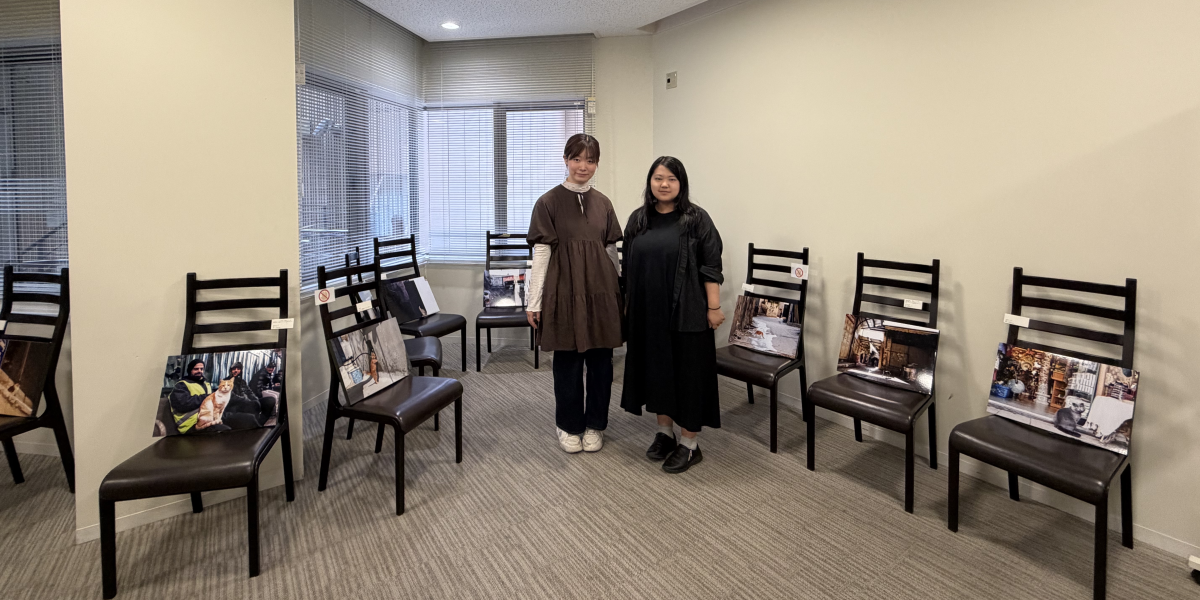
Exhibition programs explored the theme of “war and peace across past, present, and future.” These included the photo exhibition “Cats of Palestine,” as well as displays by the Nagasaki Archive and ICU Archives. By reflecting on ICU’s history rooted in a commitment to peace, these exhibitions encouraged visitors to pause and consider peace as a personal and present issue.
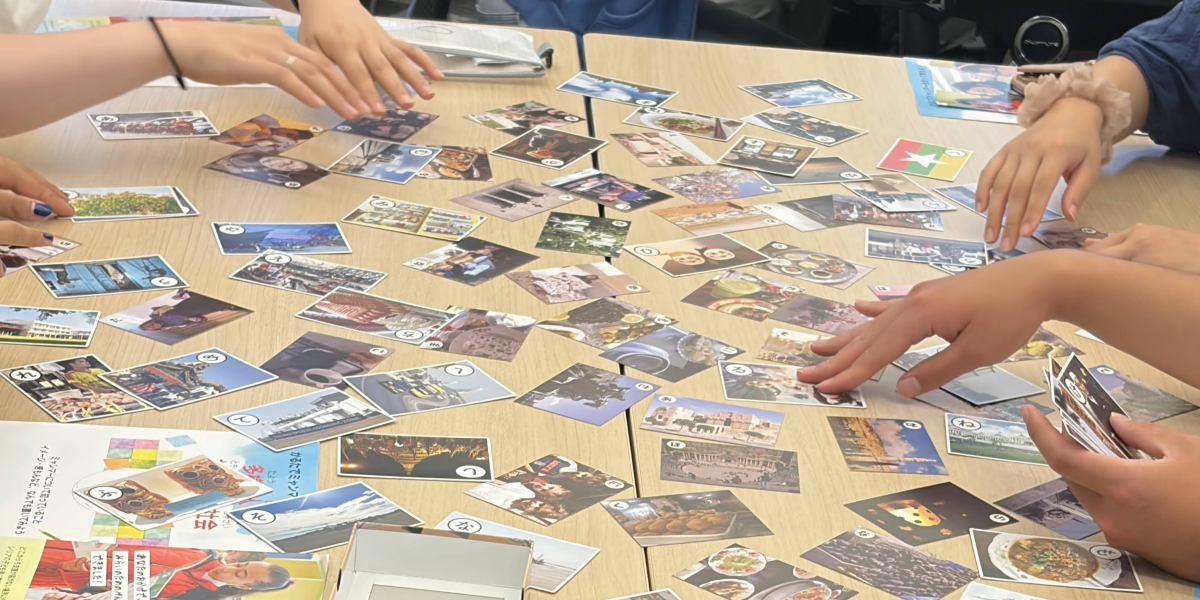
An interactive program titled “Learning about Conflict through Karuta: Thinking about Peace through Play” was also held. Through “Yangon Karuta,” created by ICU students, and “Syria Karuta” developed by the NPO Piece of Syria, participants engaged with the everyday lives and cultures of people living in conflict situations, fostering dialogue and shared reflection on the meaning of peace.
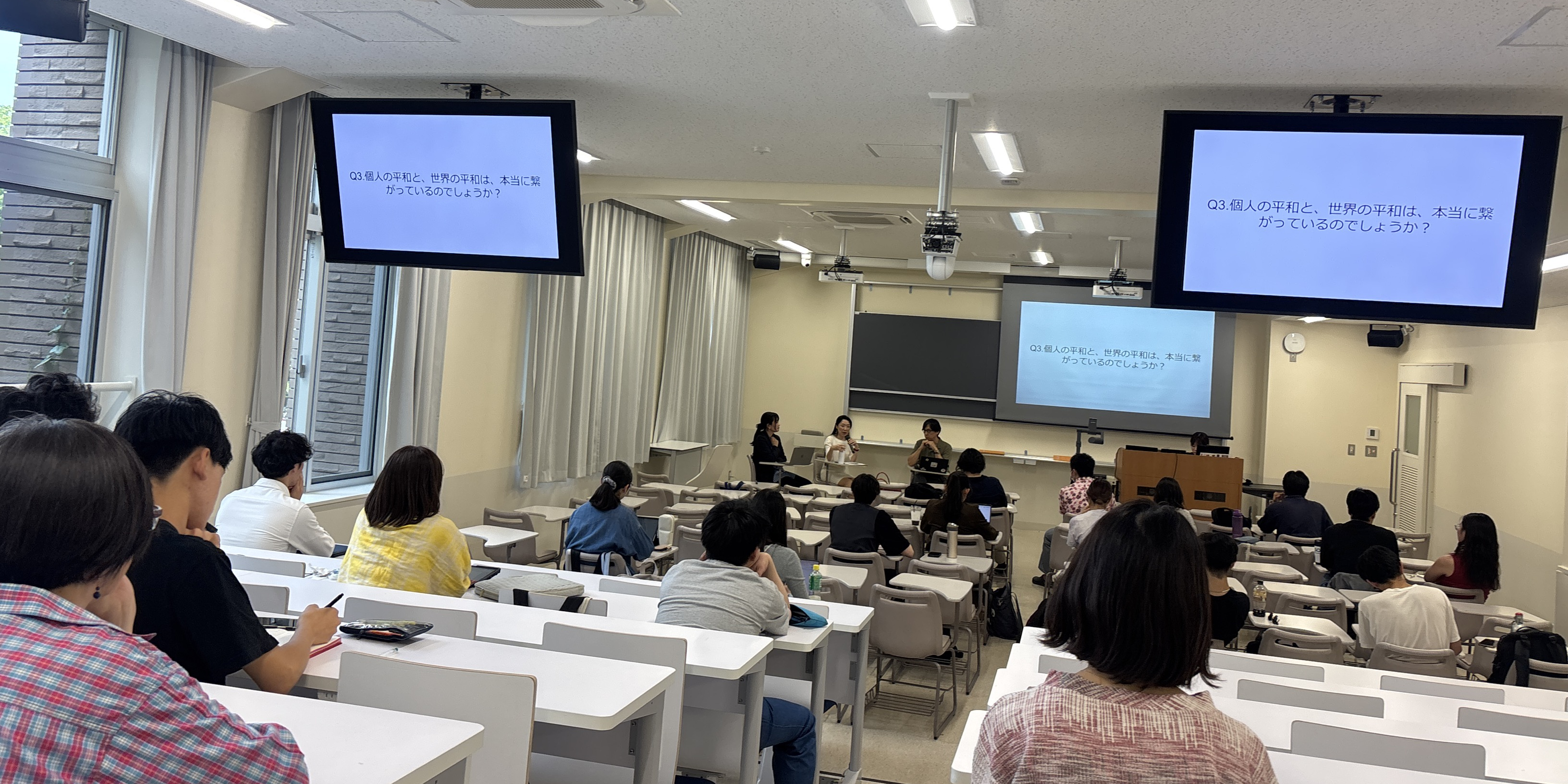
In addition, a philosophical dialogue event featuring philosopher Rei Nagai was held, along with a panel discussion with ICU faculty members: Associate Professor Rekishu Yamazaki (Physics), Associate Professor Naoko Hashimoto (Law), and Assistant Professor Miki Tamura (Philosophy and Religion).
A film screening of “‘To Live' People Who Fought in the Okawa Elementary School Tsunami Lawsuit ” was also held, with a student who had participated in the international SL program and had also been involved in last year’s event contributing as a member of the organizing team. Through this film, participants had the opportunity to reflect deeply on the meaning of “living.”
The initiatives led by Nagasaki SL participants were supported by the SDGs Project grant from the Japan ICU Foundation (JICUF), while the film screening was funded by Middlebury College’s Projects for Peace. The event thus represents one of the outcomes of ongoing efforts made possible through such support.
Peace & Reconciliation Week served as an important platform for exploring peace and reconciliation from diverse perspectives. It was particularly notable that students with Service-Learning experience actively applied their learning, contributing to the event’s success and extending their engagement toward future action.