
Report: AY2025 Language Program for Faculty (LPF)
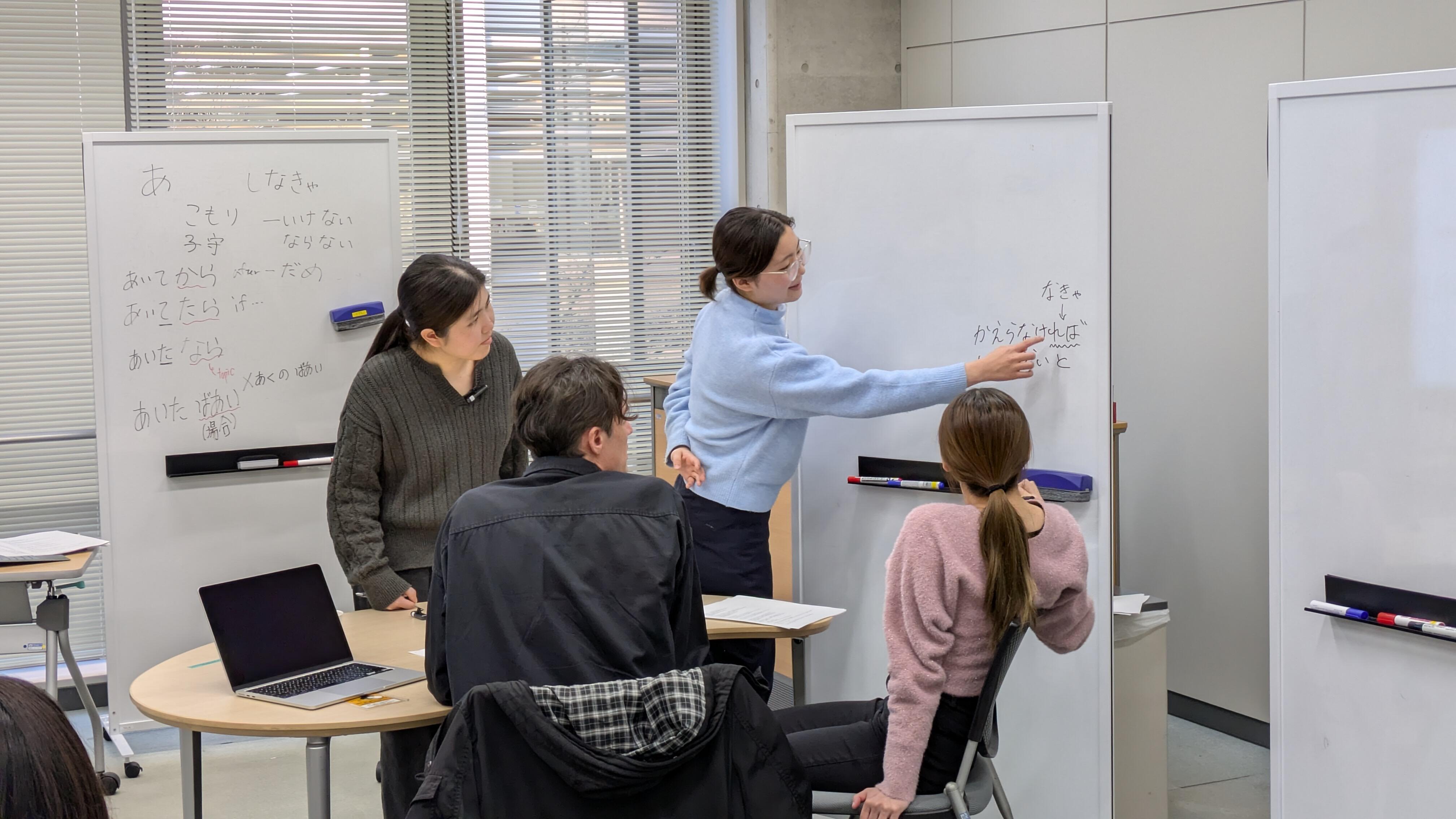
The Language Program for Faculty (LPF) was implemented from December 2025 to February 2026. Following the high praise received for the inaugural program in 2024, this marked the second year of the initiative.
The LPF is an innovative project designed to connect ICU students’ educational development with the faculty’s academic activities. This program provided Japanese language classes specifically for teaching staff whose native language is not Japanese, offering an excellent opportunity to enhance language skills for teaching, student advising, and research.
The program was open to both faculty members and their families, fostering inclusivity and a supportive learning environment. It was held on Fridays from December 2025 to February 2026, during the 5th and 6th periods (15:25–18:05). To address the feedback regarding proficiency levels from the previous program, this year’s LPF was redesigned into two courses: "Hajimeyoo Nihongo" for beginners and "Migakoo Nihongo" for intermediate/advanced learners. The program consisted of eight sessions in total, and lessons were carefully customized based on participant feedback collected through a needs survey.
One of the most distinctive aspects of the program was its integration of ICU students enrolled in the Japanese Language Teacher Training Program as Student Instructors (SIs). By reversing traditional roles, students gained hands-on teaching experience while guiding faculty members—a unique learning opportunity for both groups.
A total of 7 faculty members and their families, along with 10 student instructors, participated in the sessions. Every session was highly vibrant and lively. The participating faculty members highly appreciated the focused instruction in small groups, the SIs' dedicated preparation, and their flexibility in responding to questions. Additionally, the inclusion of social and cultural contexts beyond mere language education was highly valued for its practical relevance. Suggestions were also made for the further integration of digital tools like Quizlet and the introduction of basic kanji for daily life.
Positive feedback was also received from the SIs, who found the experience of lesson planning and teaching implementation to be a valuable opportunity for their growth. This initiative highlighted ICU’s commitment to fostering its vibrant and collaborative community where faculty and students learn together.
At the same time, we definitely faced more difficulty in recruiting participants compared to 2024, which was influenced by the new timetable that started in 2025. Moving forward, a key task will be planning programs that fit into the busy schedules of teachers who need language assistance.
*This project was powered by the Japan ICU Foundation.